- Judge brightness by lumens, not watts alone, and favour warm LEDs to keep a convincing vintage mood.
- Layer ambient, task and accent lighting instead of relying on a single fixture.
- Choose materials and finishes that echo the room, such as brass, aged metal, opaline glass, wood or textile shades.
- Check bulb size, dimmer compatibility and colour rendering before buying decorative filament LEDs.
- If you buy an original vintage fixture, have the wiring and installation checked before use.
After the positive feedback that we received from readers in our newsletter "10 tips on how to choose and position your retro coffee table" we have decided to replicate this format with a stylistic piece on how to choose, assemble and position vintage lighting in your home. By following these tips, perhaps even only the ones most applicable to a specific interior, it will become much easier to create a certain cohesion in the home and clear vintage style through the incorporation of lighting and lighting accessories.
Tip number 1: Need a lot of light? Do not judge power by watts alone
The notion that maximum power is always a necessity to achieve vintage style with regards to lighting is a false one. Low energy consumption produces little heat but can still be effective. An 18 Watt LED bulb provides very high light, equivalent to that of a 140 Watt filament bulb, without getting too hot. To hide LED lights, choose lampshades with patterns and dark colours.
A more useful comparison today is lumens rather than watts. For a vintage effect, also pay attention to beam spread and diffusion: a warm LED behind opaline glass or a fabric shade often feels softer and more authentic than a bare, high-output bulb. If the bulb sits inside an enclosed shade, check that the LED is suitable for that use.
Tip number 2: Mix decorative styles with the appropriate materials
In an interior with mineral materials such as concrete, brick, tiles or clear stone, integrating lighting with textile or wooden materials to achieve vintage style can be done with ease. Another way to achieve this contrast is to position a metal lighting fixture on an old or scandinavian wardrobe.
A simple way to keep the mix coherent is to repeat one finish at least twice in the room: for example aged brass on a wall light and on a mirror frame, or black metal on a pendant and a side table base. If you choose an authentic vintage fitting rather than a new vintage-style lamp, have the wiring, socket and fixing checked by a qualified electrician before installation.
Tip number 3: Avoid using light bulbs with cold light
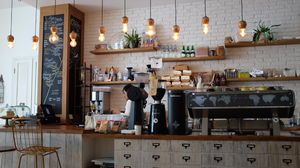
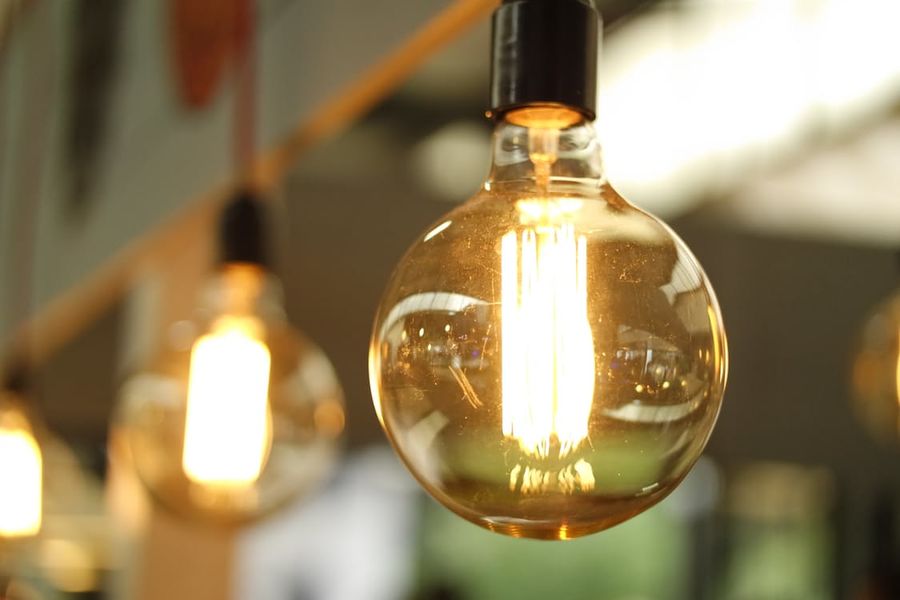
To achieve another form of aesthetic success and vintage style with bright lighting, choose warmer light bulbs, or straightforward retro filament bulbs, which will provide warm lighting with retro touches.
In practical terms, amber-toned bulbs work beautifully in lounges, bedrooms and dining areas, while a slightly cleaner warm white is often easier for kitchens, desks and bathroom mirrors. It is also worth checking colour rendering, as good-quality bulbs help wood, leather and painted walls keep their natural depth.
Tip number 4: Analyse the atmosphere of a room before choosing the colour of the lamp
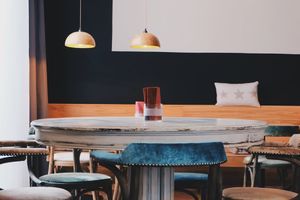
If the lamp you choose has a shade or an opaque reflector, then its interior colour is of paramount importance. White tends to maximise diffusion, whilst orange and copper offer warm and pleasant light, creating vintage style. The same can be said for a transparent shade. Its colour will create a slightly tinted diffusion, for a subdued and relaxing atmosphere.
Reflective interiors also change the result. A copper-lined shade throws a noticeably warmer glow than a white enamel interior, while opaline or frosted glass softens contrasts and helps avoid glare. If possible, test the lamp when switched on: the finish can look discreet by day and far more dominant at night.
Tip number 5: Use multiple lamps to create the perfect lighting atmosphere
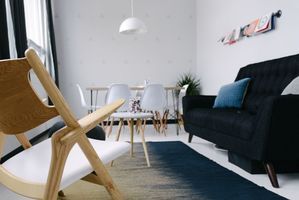
What is the ideal number? According to the designer India Mahdavi, the perfect amount of lamps or lighting accessories to achieve vintage style in a large room of 30m squared is seven, or five in a room of 20m squared. When lamps are positioned in the corners of a room, they take the gaze away from the light and create a sense of space.
What matters even more than the exact number is variety. The most successful rooms usually combine ambient light, task light and accent light at different heights: a ceiling light for the base layer, a floor lamp near seating, and a table or wall lamp to highlight a shelf, artwork or sideboard. Dimmers are especially useful here, but if you use smart bulbs, make sure they are compatible with your switch or dimmer system.
Tip number 6: Position your lighting in the areas which need most light
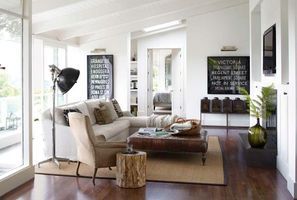
In a living room, a vintage light is best placed near a vintage retro sofa or a retro armchair. To achieve vintage style, it can also be orientated towards pretty objects on a shelf. In a room, they will be oriented towards a cabinet or a console. On a staircase, it is more effective to light the steps rather than the walls.
Positioning should follow use as much as decoration. In a reading corner, place the light slightly behind or beside the shoulder to reduce glare on the page. Above a dining table or console, make sure the fitting visually anchors the furniture without interrupting conversation or eye lines when seated.
Tip number 7: In the bedroom, opt for relaxed lighting
To achieve indirect lighting, it is best to opt for lighting which reflects from the ceiling or walls. The best choice would be lampshades of vintage style that diffuse a coloured light, and bulbs with very warm light.
Bedside practicality matters too. Individual switches on each side of the bed, or wall lights with directed but soft beams, make the room more comfortable without breaking the vintage look. If you enjoy reading in bed, pair the relaxed general glow with a more focused secondary light rather than increasing the brightness of the whole room.
Tip number 8: In the bathroom, try to incorporate lighting that resembles natural daylight
If you have a bathtub, the most ideal light would be one which allows you to control the light with a dimmer switch, so that you can adjust it downwards during moments of relaxation. This also guarantees an element of retro, vintage style to your interior.
In addition, think in layers: diffuse frontal light around the mirror helps with everyday grooming, while softer secondary lighting near the bath creates a calmer atmosphere. In wet rooms, always check that the fitting is suitable for bathroom use and installed in accordance with local electrical rules.
Tip number 9: In the hallway, prefer instant-on LED bulbs to slow-start compact fluorescents
In a circulation space, immediate light is usually far more practical than bulbs that need time to reach full brightness. For that reason, compact fluorescent bulbs are no longer the most convincing option for many hallways; warm LEDs are generally easier to live with, more discreet in vintage fittings and available in decorative filament versions if you want a more retro look.
Check the start-up performance, dimmer compatibility and the size of the bulb before buying, especially for small wall lights or enclosed shades. Bear in mind that vintage style can be created with different technologies; what matters most is the colour of the light, the visibility of the bulb and the way you position it.
Tip number 10: Do not use a lamp as your main source of light if it is not designed for this function
Lighting a room with vintage table lamps provides an imperfect look even with powerful bulbs. It is the same for a living room lit mainly by a lamppost of insufficient height. A vintage lamp should be an accessory, but not the main source of light. Vintage style can be achieved with successful lighting and emphasis on light, or subtle undertones manifested by lighting accessories.
If you want a table lamp or small wall light to be the visual star, support it with a discreet general source elsewhere in the room. This is one of the easiest ways to make vintage lighting look intentional rather than underpowered, especially in open-plan interiors where one fitting rarely covers every activity.
FAQ: vintage lighting at home
-
Which bulb colour works best for a vintage atmosphere?
Warm light is usually the safest choice for vintage interiors, especially in living rooms, bedrooms and dining spaces. If a room needs more functional light, choose a warm but clearer bulb rather than switching to a very cold tone.
-
Can I use LED bulbs in antique or vintage-style lamps?
Yes, in many cases LED bulbs are the most practical option because they run cooler and are widely available in warm, decorative styles. Always check the lamp holder, maximum recommended wattage, bulb dimensions and dimmer compatibility.
-
How do I mix vintage lighting with a modern interior without making it feel themed?
Repeat one or two finishes, keep the palette controlled and let each light serve a clear function. A single vintage pendant or a pair of vintage-style wall lights often has more impact than filling a room with too many period references.
-
What should I check before installing an original vintage fixture?
Look at the condition of the cable, socket, fixing points and any metal parts, and have the fitting checked or rewired by a qualified electrician if needed. This is especially important in bathrooms, kitchens and older homes.